
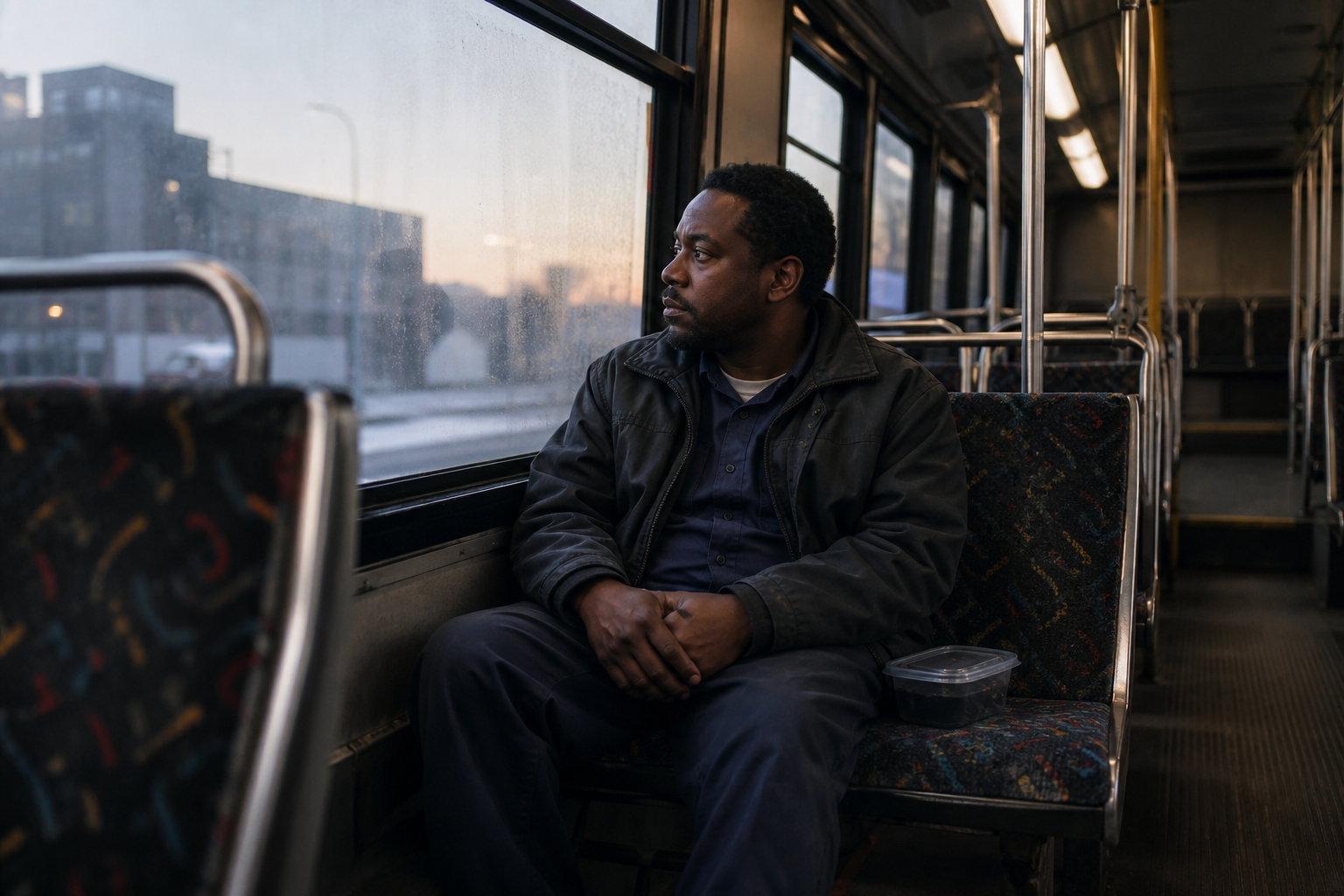
Night shift brain fog is two problems stacked. You are asked to think clearly during the hours your internal clock has scheduled as its lowest-alertness window, and then to sleep during the hours it is actively signalling wakefulness — which makes daytime sleep shorter and easier to interrupt. The result is chronic partial sleep restriction sitting on top of circadian misalignment. That is a scheduling and light problem, and the levers that work on it are light timing, protecting the sleep block, and using caffeine early in the shift rather than late. Nothing sold as a cognitive supplement realigns a circadian clock.
We’re not recommending a product on this page. No supplement in our evidence file has been tested in rotating shift workers, and none of them acts on circadian misalignment. Start with the tier list — it shows which compounds have human trials behind them and which don’t.
See the tier list →What is actually going on
Two systems set your alertness: how long you have been awake, and where you are in your own 24-hour cycle. On a day schedule they cooperate. On nights they fight. You accumulate pressure to sleep across the shift while your clock is simultaneously pushing alertness down through the small hours, which is why the worst stretch is usually the last third of a night shift rather than the middle.
Then you go home and try to sleep against a rising internal wake signal, in daylight, in a household running on a different schedule. Daytime sleep tends to be shorter and more easily broken than the equivalent block at night. Do that four nights in a row and you are not just misaligned — you are also carrying real sleep debt, and the two produce overlapping symptoms. This is a mechanistic account of why the complaint has the shape it does, not a measurement of your case. It matters because it predicts something testable: state-dependent fog should lift when the state changes.
Why it feels like cognitive decline, and why it usually isn’t
The subjective experience is close to what people describe in early decline. Words go missing, you reread paragraphs, you make errors you would normally catch, and it is worse for self-directed work than for anything externally paced. The difference is the trajectory: misalignment fog fluctuates with the rota and lifts on a long stretch of normal-schedule days. Decline does not lift. If yours does not improve after a proper run of days off with unrestricted sleep, that is the signal to stop self-managing — see when brain fog is a red flag, and brain fog when your bloodwork comes back normal if you have already been tested.
How to tell it is this and not something else
- It worsens across consecutive nights and improves after days off. That is misalignment plus sleep debt.
- The worst window is the last few hours of the shift, not the start. That is the circadian component rather than boredom or workload.
- Your daytime sleep block actually has to happen. Six hours in bed with three interruptions is not six hours of sleep, and most people on nights overestimate what they got.
- It should not survive a two-week holiday on a normal schedule. If it does, this is not the page you need.
What helps, in order of evidence strength
Everything with real weight behind it here is behavioral. That is not a stylistic preference — it is what the evidence supports, and a page that leads with a capsule for a scheduling problem is selling you something.
1. Protect the sleep block
A fixed, dark, cool, quiet, phone-free block of adequate length, at the same clock time on every night-shift day, is the single largest lever available. Blackout coverage and a household agreement about noise do more than any product on this page.
2. Manage light, in both directions
Bright light during the shift and darkness on the commute home are the two interventions that act on the actual mechanism rather than on the symptom. We are not attaching effect sizes, because our evidence file covers supplements rather than light protocols, and inventing a number would be worse than naming the gap. The same applies to nap strategy and rota design — a nap before the first night and forward-rotating rather than backward-rotating rosters are widely used, and we are flagging them as practical points rather than as findings we can cite.
3. Caffeine, front-loaded
Caffeine reliably improves vigilance, sustained attention, reaction time and subjective alertness; it does not reliably improve memory consolidation, learning or executive function2. On nights the timing question is sharper than on a day schedule. With a half-life of roughly five to six hours, a coffee at 4am is still substantially present at 10am when you are trying to fall asleep — so caffeine belongs in the first half of the shift. In habitual consumers, much of the apparent benefit is reversal of withdrawal rather than net enhancement.
4. Caffeine plus L-theanine
The most relevant supplement evidence on this page, because for once it was tested in the right state. A 2025 crossover trial in the British Journal of Nutrition found high-dose theanine plus caffeine improved neurobehavioral and neurophysiological measures of selective attention in acutely sleep-deprived young adults3. The broader picture from a 2025 meta-analysis in Nutrition Reviews (16 trials, 484 participants, median age 32) is digit vigilance accuracy SMD 0.20 (95% CI 0.02–0.38) and attention-switching accuracy SMD 0.33 (95% CI 0.13–0.54) at hour two1. Small, real, lasting hours. It does nothing about the misalignment underneath.
5. Creatine — plausible here, unproven here
A 2023 meta-analysis (8 RCTs, 225 healthy participants) found memory SMD 0.29 (95% CI 0.04–0.53), concentrated almost entirely in adults aged 66 to 76 rather than the young4; a 2024 analysis (16 RCTs, 492 participants) found memory SMD 0.31 but no significant effect on overall cognition, executive function or attention scores5. Its relevance here is that the benefit clusters in people under high metabolic stress, including the sleep-deprived — which describes shift workers. That is a plausible fit, not a demonstrated one, and EFSA rejected a creatine cognitive-function claim in 2024 as not established6.
6. L-tyrosine — conditional, and probably under-dosed
The standard review concluded tyrosine replenishes cognitive resources when neurotransmitter function is temporarily depleted, and does not improve cognition otherwise7. Prolonged wakefulness is one of the named depleting conditions, and the military and environmental literature is the closest analogue to a night shift that exists8. Two caveats: those studies used 100–150 mg/kg acutely, roughly 7–12 g for an adult, against consumer products supplying 500–2,000 mg; and acute tyrosine impaired response inhibition in healthy older adults in one study9.
| Intervention | What it acts on | Evidence | Verdict for night shift |
|---|---|---|---|
| Protected sleep block | Sleep debt | Behavioral, outside our supplement file | Largest lever |
| Light timing | The misalignment itself | Behavioral | Acts on the actual mechanism |
| Caffeine, first half of shift | Vigilance, reaction time | Healthy adults, acute | Works; costs your day sleep if taken late |
| Caffeine + L-theanine | Selective attention | Sleep-deprived young adults; 484 adults meta-analysed | Small, real, a few hours |
| Creatine 3–5 g/day | Memory | SMD 0.29–0.31, concentrated in 66–76s | Plausible, unproven here |
| L-tyrosine | Working memory under depletion | Trial doses 7–12 g | Consumer doses may be sub-threshold |
What doesn’t help, but gets sold to you anyway
Shift workers are a heavily targeted market, and the pitch is almost always framed as energy rather than as circadian biology.
- Rhodiola rosea, including the night-duty studies. This is the honest place to raise it, because the most-cited positive rhodiola studies were run in night-duty physicians and military cadets. They are small, short and mostly from one research lineage, and the reference systematic review of 11 trials concluded the evidence for physical and mental fatigue is limited and contradictory, with substantial methodological problems10. Cognition-specific evidence is weaker still.
- Ashwagandha. A 2026 meta-analysis of 20 RCTs reported memory SMD 0.52, with 14 of the 20 trials run in India, many with manufacturer involvement, and most lasting eight weeks13. It stays off the list here on safety grounds, set out below.
- Vitamin D — and why it is tempting. Night workers genuinely get less daylight, and low vitamin D is strongly associated with poorer cognition observationally. The randomized trials are null: VitaMIND found no significant cognitive benefit in adults with mild-to-moderate deficiency15, and the Finnish Vitamin D Trial found no reduction in diagnosed dementia in healthy older adults16. Correcting real deficiency is worth doing for bone and muscle. It is not an established cognitive intervention.
- Vitamin B12, unless you are deficient. Correcting deficiency matters a great deal; supplementing replete people does nothing. Genuine risk groups: adults over 50, vegans, people on metformin or long-term proton pump inhibitors17.
- Lion’s mane, PQQ and ginkgo. Lion’s mane has seven small, short, inconsistent trials, one finding fewer words recalled on delayed recall than placebo in healthy young adults18. PQQ’s mitochondrial story is cell-culture and rodent work plus a handful of small, mixed, often industry-affiliated human trials20. Ginkgo’s 2026 Cochrane review (82 studies, 10,613 participants) found little or no difference in mild cognitive impairment at six months19. None of them has a shift-work trial.
- Melatonin — and what we are not going to say. It is the compound most often raised in this context, and it is not covered in the evidence file this site works from. Rather than characterize it from memory, we are saying plainly that we do not have a sourced position on it, and that it is worth raising with a pharmacist, who can also check it against everything else you take.
Community reports — not trial data
Two things come up repeatedly in shift-worker forums. People who commit to a single fixed daytime sleep block, rather than sleeping opportunistically in fragments, report the largest improvement — and report it within a couple of rotations. And “adrenal support” or cortisol stacks are widely bought and widely abandoned. Neither observation is trial evidence; they are worth knowing as things people actually try.
⚠️ Talk to your prescriber first
Rhodiola is a potent in vitro inhibitor of CYP3A4 and P-glycoprotein, which between them handle a very large share of prescription drugs — statins, calcium-channel blockers, immunosuppressants, and the anticoagulants apixaban and rivaroxaban1112. It also carries case reports of activation or mania in bipolar disorder. Ashwagandha is assigned likelihood score B by NIH LiverTox — a likely cause of clinically apparent liver injury, roughly 23 published cases as of the 2024 update, latency typically two to twelve weeks14. Stop and see a doctor for jaundice, dark urine, pale stool, right-upper-quadrant pain, unexplained fatigue or itching. It can also raise T3 and T4, destabilising levothyroxine dosing. Caffeine reduces levothyroxine absorption (separate by ≥60 minutes), and fluvoxamine raises caffeine exposure severalfold. If you take prescription medication, run any of this past whoever prescribed it.
When this warrants a doctor
Shift-related fog should track the rota. Get assessed if it does not lift after a proper run of days off; if your daytime sleep is unrefreshing despite an adequate, protected block; if you snore heavily or someone has witnessed you stop breathing; if you are falling asleep at the wheel on the commute home, which is a safety issue rather than a supplement question; if the fog is progressive rather than fluctuating; or if it arrives with low mood, weight change, headache, numbness or visual change. The full list is at when brain fog is a red flag, and the broader map of causes is at brain fog.
What would change our mind
A randomized trial in actual rotating shift workers, run across a full rotation, comparing a structured light-and-sleep-scheduling protocol against a supplement arm at consumer doses, with objective attention and error measures taken at the end of night shifts. Nothing like that exists. If a supplement arm matched or beat the scheduling arm in that design, we would rewrite the order on this page.
Frequently asked questions
Do you ever fully adapt to night shifts?
Full adaptation would mean your internal clock shifting to match your rota and staying there — difficult when your days off run on daylight and a normal social schedule. Most people on rotating shifts are partially adapted at best, which is why the fog tends to track the rota rather than disappearing after a few months.
Is night shift brain fog permanent?
The pattern described here is state-dependent and lifts when the state changes. Fog that does not lift after a proper run of days off with unrestricted sleep is not explained by this page and should be assessed.
When should I stop drinking coffee on a night shift?
Treat the first half of the shift as the window. With a half-life of five to six hours, a 4am dose is still substantially present at 10am — exactly when you are trying to fall asleep. If you take oral contraceptives, are pregnant or take fluvoxamine, it stays longer still.
Should I take something to sleep during the day?
That is a question for a pharmacist or your doctor, not for a supplement label, and it is the one place on this page where we think you should ask before you buy. Sleep aids interact with a great deal, and daytime sleep on a rotating rota is a genuinely difficult problem to solve chemically.
Related reading
- Brain fog: what the term does and doesn’t mean
- When brain fog is a red flag: symptoms that warrant a doctor
- Brain fog when your bloodwork comes back normal
- Brain fog after eating: the postprandial crash explained
- Do nootropics actually work? An honest tier list
- The case against brain supplements
Sources
- L-theanine and caffeine on cognition: systematic review and meta-analysis (Nutrition Reviews, 2025)
- Caffeine and L-theanine: neuroimaging proof-of-concept randomized trial (Scientific Reports)
- Theanine + caffeine and selective attention in sleep-deprived adults (British Journal of Nutrition, 2025)
- Prokopidis et al., creatine and cognition: systematic review and meta-analysis (Nutrition Reviews, 2023)
- Xu et al., creatine supplementation and cognitive function (Frontiers in Nutrition, 2024)
- EFSA scientific opinion on creatine and cognitive function (2024)
- Jongkees et al., tyrosine and cognitive control under demanding conditions (J Psychiatr Res, 2015)
- Thomas et al., tyrosine and working memory in a multitasking environment (1999)
- Bloemendaal et al., tyrosine impairs response inhibition in healthy older adults (eNeuro, 2018)
- Ishaque et al., Rhodiola rosea for physical and mental fatigue: systematic review (BMC Complement Altern Med, 2012)
- Hellum et al., Rhodiola inhibition of CYP3A4 and P-glycoprotein (2010)
- Memorial Sloan Kettering About Herbs monograph: rhodiola
- Ashwagandha and cognition: systematic review and meta-analysis of 20 RCTs (Frontiers in Pharmacology, 2026)
- NIH LiverTox: ashwagandha (Withania somnifera)
- VitaMIND randomized controlled trial: vitamin D and cognition (JAMDA, 2025)
- Finnish Vitamin D Trial: dementia incidence in healthy older adults
- NIH Office of Dietary Supplements: vitamin B12 health professional fact sheet
- Cognitive Vitality rating: lion’s mane (Alzheimer’s Drug Discovery Foundation)
- Cochrane review 2026: ginkgo biloba for cognitive impairment and dementia
- Nakano et al., PQQ disodium salt and brain function (Food & Function, 2023)
These statements have not been evaluated by the Food and Drug Administration. Nothing here is intended to diagnose, treat, cure or prevent any disease.
This article is information, not medical advice. Talk to a doctor or pharmacist about your own situation, especially if you take prescription medication.